Weathering the Storm with Kentledge Blocks

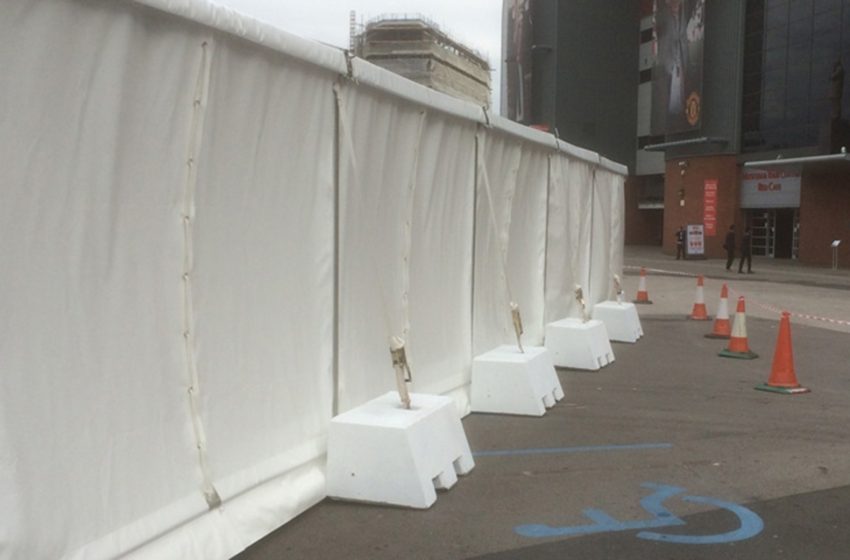
As stronger winds and wetter ground returns, fencing contractors and site managers must ensure temporary and freestanding fencing systems remain stable.
Owen Batham from Elite Precast Concrete commented:
“Autumn and winter bring challenging conditions for fencing installations. Strong winds, saturated ground and repeated bad weather can place significant pressure on temporary fencing, construction hoardings, site screens and freestanding perimeter systems.
“If a fencing system has not been properly designed, ballasted and maintained, high winds can cause it to lean, move or overturn. This creates a serious risk to workers, pedestrians, vehicles, neighbouring properties and the public.
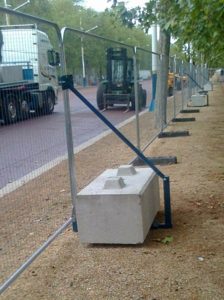
“Precast concrete Kentledge Blocks provide a practical method of adding weight and stability to fencing systems, particularly where posts cannot be installed directly into the ground.
“Wind does not simply pass over or around a fence. It creates pressure on the surface, transferring forces through the panels, posts and supporting structure.
“The risk is particularly significant with solid hoarding, acoustic panels, privacy screens, advertising banners and debris netting. These can behave like sails, greatly increasing the wind load placed on the fencing system.
“Even open mesh fencing can become more vulnerable when banners or sheeting are attached. A system that was originally designed to allow air to pass through it may behave very differently once its open area has been covered,” added Owen.
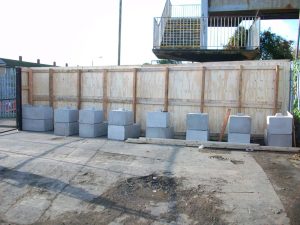
Kentledge blocks are heavy precast concrete units used as counterweights or ballast. Their mass helps resist movement, sliding and overturning when incorporated into a properly designed support system.
In fencing applications, Kentledge blocks may be used to secure:
- Temporary construction fencing
- Freestanding perimeter fencing
- Site hoardings
- Event fencing
- Pedestrian control systems
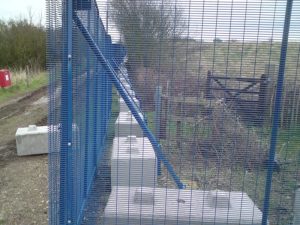
- Security fencing
- Acoustic screens
- Fencing around utilities or excavation work
- Temporary gates and access points
Owen continued:
“They can be particularly valuable where excavation is restricted or where underground utilities, finished surfaces, landowner requirements or temporary site arrangements prevent conventional post foundations from being installed.
“Because Kentledge systems do not necessarily require the ground to be penetrated, they can offer a flexible solution for concrete yards, car parks, highways compounds, construction sites and other hardstanding areas.
“Placing a heavy block beside a fence does not automatically make the installation safe. The Kentledge block must form part of a properly configured system, with suitable connections, supports and bracing.
“A competent designer or system supplier should determine the required weight, spacing and arrangement. Contractors should never assume that a particular Kentledge block will be suitable for every fencing application.
“Where temporary works are involved, the design, installation, inspection and alteration of the system should be controlled through the project’s temporary works procedures.
“The best time to review a fencing installation is before severe weather arrives,” he added.
For further information about Kentledge blocks and Elite Precast Concrete’s wider range of precast products, visit www.eliteprecast.co.uk or contact the Elite sales team.