Not All Green Treatment Is the Same… So what are you actually getting with Platinum Incised 15?


Could UK Storm Season See a Flood of Japanese Knotweed Infestation?

Days after wreaking havoc across the UK, it’s feared that widespread, severe flooding from our trio of named storms might have greater consequences than first predicted.
Storms Dudley, Eunice, and Franklin, which wreaked havoc across the British Isles last week, have continued to spur flooding events that may have long-term consequences as an unintentional spreader of notorious weed species, Japanese knotweed. With over 60 different flood alerts and warnings issued countrywide, there’s a great risk of Japanese knotweed spreading to areas previously outside of its reach.
The invasive weed, described by the Environment Agency as “indisputably the UK’s most aggressive, destructive and invasive plant”, has recently been the subject of updated advice and guidance from RICS (the Royal Institute of Chartered Surveyors).
The urgency of treating suspected cases of Japanese knotweed where it could be invading your property remains a critical priority. As a highly invasive species, the UK government has identified Japanese knotweed as a weed that must be professionally treated to prevent its spread. It is estimated that up to 1.45 million homes in Britain might be affected by this invasive species, which has a reputation for being difficult to kill.
Japanese knotweed is often found along riverbanks, where soil containing root fragments is broken loose and travels downstream on currents, and often then spilling into neighbouring land. Even these small pieces of root can take hold, allowing knotweed to grow and spread. In areas affected by extreme flooding, the spread of Japanese knotweed may be accelerated beyond its already notorious rates. Naturally occurring disasters like flooding and storms encourage Japanese knotweed to take hold in areas that it previously couldn’t get to.
Homeowners should be cautious that flooding caused after Eunice, the worst of the three storms, might have been another catalyst for the spread of Japanese knotweed. But it’s not simply low-lying areas that are at risk, as Japanese knotweed rhizomes – the root system – are washing up in previously unaffected properties, creating new infestations in different parts of the country.
From springtime through summer, Japanese knotweed shoots up through the soil in the form of bamboo-like stems, reaching up to 3m (9.8ft). Alarmingly, in peak season, shoots of Japanese knotweed can spring up to 10cm a day.
CEO and Founder of Japanese Knotweed Specialists, Adam Brindle (CSJK) has said:
“If it’s not controlled by a specialist, Japanese knotweed can grow through cracks and vulnerabilities in concrete, hard standings, and in worst cases destabilise foundations. Treating knotweed is critical, because an unchecked infestation can be extremely costly.”
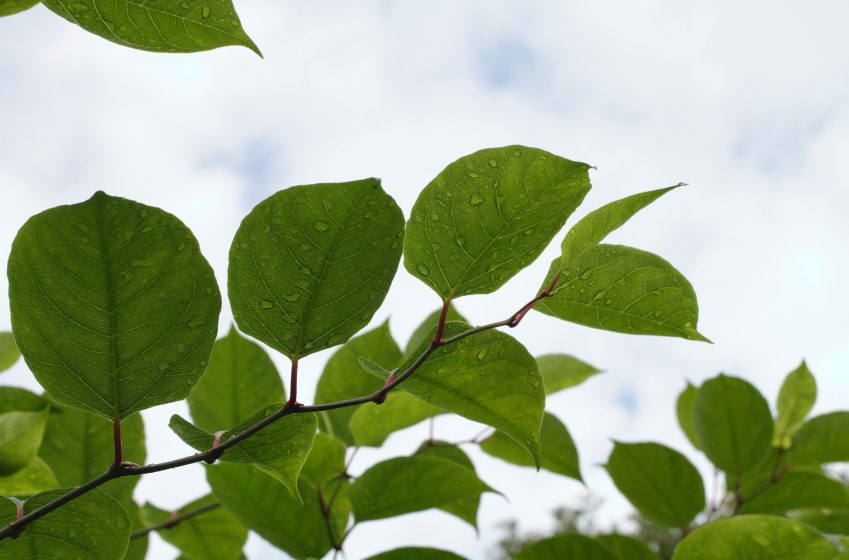
This makes identification a critical first line of defence. Common red flags include hollow, bamboo-like canes, an aggressive growth habit, and a zigzag appearance. Using a Japanese knotweed image gallery can help in the identification process, but you should use a professional service to carry out a full survey and report for official confirmation of this highly invasive and damaging plant.
Don’t be fooled if you live outside of areas recognised for infestations because, if you’ve recently had flooding, it’s worth looking for red flags where knotweed has been spread by the UK’s recent weather events.
Even if you suspect that Japanese knotweed is growing in your garden, DIY removal may be ineffective, because it only takes small traces of root fragments to regrow or your treatment could cause the knotweed to spread further. A specialist Japanese knotweed removal team should be informed immediately if the weed is suspected to be affecting your property.