FORESTRY AND WOOD PRESERVATION INDUSTRY CONTINUES TO BACK UK SOFTWOODS DURABILITY FIELD TRIAL


FORESTRY AND WOOD PRESERVATION INDUSTRY CONTINUES TO BACK UK SOFTWOODS DURABILITY FIELD TRIAL


Major forestry and wood preservation organisations are backing the UK’s biggest ever field trial of softwood fence posts managed by the Building Research Establishment (BRE).
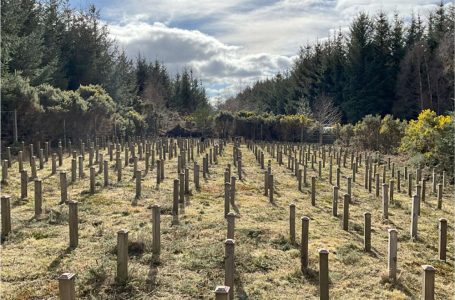
Established in 2015 to evaluate the durability (decay resistance) of fence posts made from British grown pine, spruce, larch, and Douglas fir, this important field trial was made possible thanks to a sponsorship-coalition of forestry, sawmill and industry organisations led by the Wood Protection Association (WPA) who conceived and commissioned the 15-year project.
‘Fencing is an important market for treated softwoods and a long term, independent, field trial is the only credible way to establish if homegrown softwoods can perform reliably when used for fence posts,’ says WPA Chairman, Steve Young. He confirms that in addition to reporting the findings for the exclusive use of sponsors, the data collected will also inform any changes to the preservative treatment specifications promoted by WPA to achieve the 15-year service life for treated wood set out in British Standard BS 8417, which is verified by the WPA Benchmark quality assurance scheme.
‘In this way the investment by sponsors will have a lasting benefit for the UK forestry and wood treating industries as a whole,’ says Young.
CONFOR CEO Stuart Goodall echoes this view, saying: ‘The strong, forestry, sawmill and wood preservation supply chain backing for this field trial is a much-needed collective commitment to advance commercial opportunities for homegrown softwoods’
TDUK Technical Manager, Nick Boulton underscores the value of the field trial saying: ‘Fully transparent performance data from a real-time scientific study like this is vital to building trust in preservative treated softwoods’
About the field trial
A total of 1,200 fence posts, 160 untreated posts and 300 EN252 site control reference stakes were installed across two field test sites – BRE Watford with London clay loam and Birnie Wood, Elgin, Scotland with sandy loam overlying gravel deposits. Under the terms of the field trial contract, BRE was required to verify that the production of the 75mm x 75mm sawn posts was consistent and in line with commercial practice.
This involved audits and observation visits to assess the incising, the three different copper organic preservatives being used and to ensure that the impregnation process complied with BS8417 for ground contact (Use Class 4) applications.
‘We knew that all eyes would be on the data generated, so we have been meticulously thorough in documenting our procedures and findings at every stage’ says BRE’s Ed Suttie.
Year 10 report delivers tangible performance data
Earlier this year, BRE carried out the ten-year inspection of both sites and reported the findings to WPA who then briefed the sponsors. ‘This is the most significant report to date as it gives measurable insights into the performance of different species and the benefits that accrue when wood is correctly prepared and impregnated for ground contact applications,’ says WPA Field Trial consultant, Neil Ryan..
That’s because most untreated wood controls at both sites have now failed completely due to fungal decay with the BRE data indicating a service life of less than five years. ‘This demonstrates clearly that softwood species with low natural durability should never be used for ground contact applications unless properly treated,’ says Ryan.
Another notable revelation of the BRE report is that untreated larch posts are failing faster than any other species. ‘WPA has had its suspicions about the natural durability of larch for some time,’ says Ryan, who emphasises that the field trial data clearly contradicts and dispels the widely held perception that larch is naturally durable and can be used without preservative treatment for ground contact applications.
BRE reports that all treated pine, Douglas fir and spruce posts continue to perform well. It is notable after ten years in the ground that the incised and treated spruce posts are also standing up well. BRE states that it is seeing some opening of the incisions and an elevated moisture content in these posts at ground line, but this is not resulting in a structural deterioration of the wood.
There are isolated failures of treated posts across all species and preservative types which BRE points out was not entirely unexpected after 10 years. The report points out that these are clearly outliers on the bell-curve chart of preservative performance and all other posts in the same species and preservative group are not displaying any visible signs of decay.
‘What is encouraging for the WPA and other sponsors is the irrefutable evidence that correctly treated UK softwoods can perform reliably in ground contact applications,’ says WPA Chairman Steve Young. ‘We are eternally grateful to the sponsors who have backed this important project and the decision to extend the field trial to fifteen years – the next five years will almost certainly produce more extensive performance data to help fulfil the potential of homegrown softwoods’


About the WPA
The WPA is the voice of the UK wood protection industry. It is a technical, quality assurance and advisory membership organisation dedicated to the use of wood protection technology (preservative treatments, surface coatings, wood modification and flame retardant treatments) to enhance the durability of wood and support its use as the cost effective, sustainable, low environmental impact construction material of choice.
It operates the WPA Benchmark, third-party quality assurance schemes for preservative and flame retardant treated wood products.
The WPA is recognised by regulatory bodies such as HSE and Defra as the UK authority on wood protection technologies and is the principal technical advisor to British Standards on wood preservation based on the technical consensus of its members.
The Wood Preservation Code of Practice and other technical publications produced by the WPA are referred to widely in the specifications and standards of other organisations such as NHBC, National Building Specifications (NBS) and the Highways Agency.
The WPA is funded wholly from the subscriptions of its members who span the entire supply chain and include: treatment plant and engineering suppliers, preservative manufacturers, coatings manufacturers, timber treaters, timber suppliers, modified wood manufacturers and suppliers, forestry and timber trade associations, timber product manufacturers, universities and individual wood protection consultants.
Find out more on www.thewpa.org.uk
Organisations that made the field trial possible
Project lead
-
Wood Protection Association
Independent project management:
-
Building Research Establishment
Project sponsors:
-
Wood Protection Association
-
Scottish Forestry
-
Scottish Enterprise
-
Grown in Britain
-
James Jones
-
BSW Timber
-
Arxada
-
Wolman
-
Koppers
-
Confor
-
Timber Development UK
-
Timber Decking & Cladding Association
-
Wood Campus
-
Bond Timber
-
James Davies
-
Munro Sawmills
-
M&M Timber
-
Calders & Grandidge
-
C J Timber