Not All Green Treatment Is the Same… So what are you actually getting with Platinum Incised 15?


UP THE GARDEN PATH


Louise brings some inspiration from sunny climes to inspire you.
For the first time in many years the lure of winter sunshine was too strong to ignore and I found myself escaping for a few weeks to another continent, Africa. My destination was Egypt, which allowed me to avoid one of my least favourite times of the year, namely Christmas, New Year and all the associated malarkey.
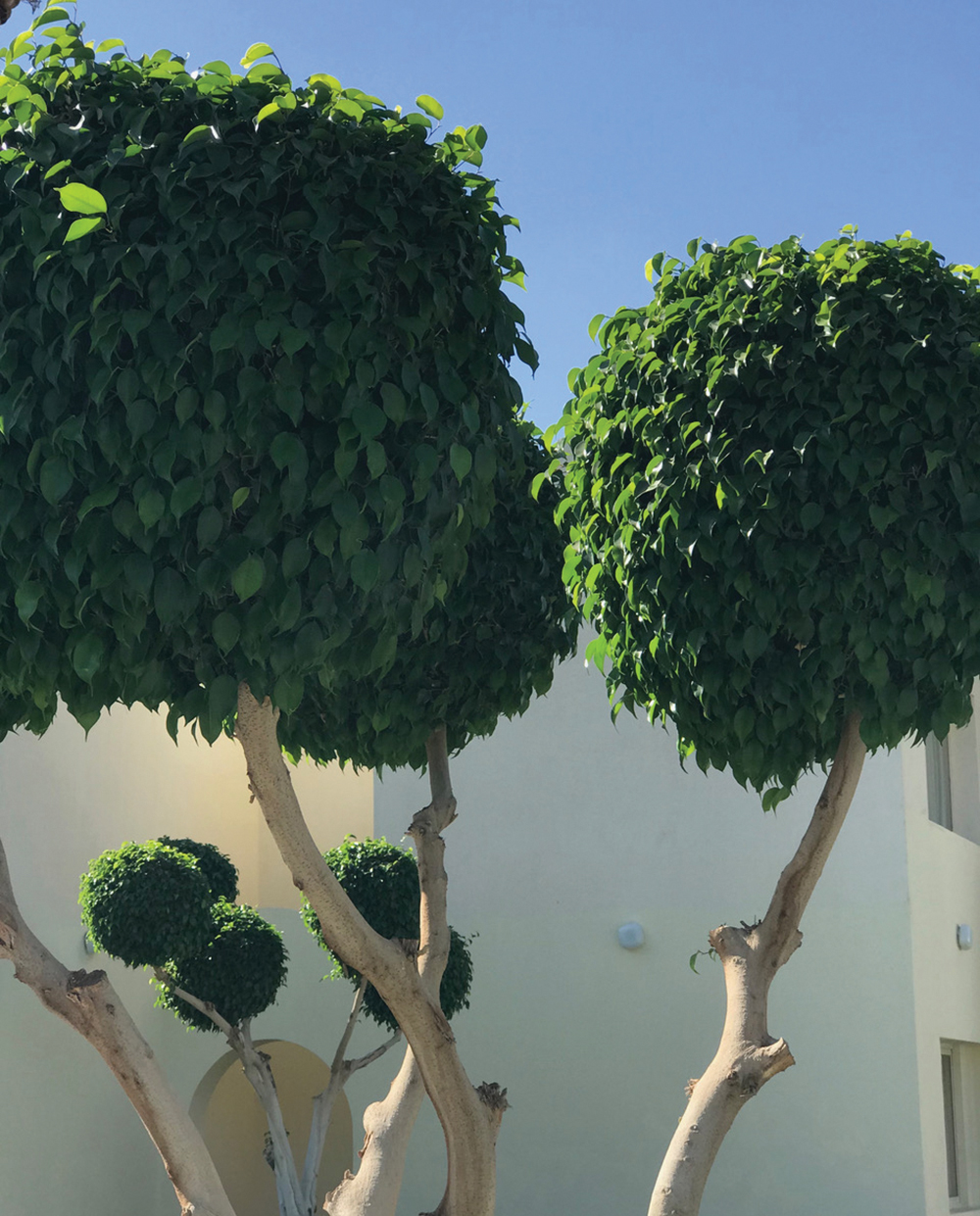
What bliss, to not think of work, to enjoy sunshine and temperatures in the mid twenties. However, it’s not as easy as it should be, being someone who’s always on the look out for interesting plants, trees and gardens. The place I found myself in made it impossible for me to not notice many lovely plants, but most of all I was totally captivated by the extraordinary cloud trees that were everywhere on the resort where I was staying for the majority of the time.
I hadn’t thought about cloud trees for years, having first been introduced to their strangely beautiful and quirky asymmetry by the very talented, award winning garden designer Matthew Childs, who included one in one of his early garden designs. From then on I’ve always been fond of them. So imagine my delight to find I’d been transported to a magical landscape where a new and splendid specimen lurked around every bend or corner.
Pretty soon I was so enthused that I decided to find out more and bring them home to share with you, in the shape of this article and a few photos of my latest ‘fad’, with blue skies and sunshine to boot, which can’t be a bad thing for this time of the year.
Now, I can’t pretend even for a moment to be an expert on cloud trees, but I will do my best to give you some relevant info. The art of pruning trees, shrubs or even hedges into cloud or ball shapes originated in Japan, it’s called Niwaki. I must point out that they can be in any type of garden, not just Japanese styles of garden. I realised that most of the ones I was admiring were some kind of Ficus, or Fig tree. This was confirmed as Ficus microcarpa, also known as Indian laurel fig (and many of other names too numerous to mention). They have dense foliage; glossy oval leaves making them ideal for clipping into topiary shapes. Their trunks and stems are pale grey and smooth (at first I wondered if they’d been painted!). They are very tolerant of heat, which means they are frequently used in landscaped areas in hot places, like Egypt. Well, common or not I still like them, but I’m afraid that unless you grew one in a big pot and brought it in to shelter from the UK winter, they’re not really viable for our climate.
A bit disappointing as I’d had thoughts of how these could be a great addition to garden schemes here, a bit like having a beautiful, living sculpture that would grow and evolve, that you could shape, something that when juxtaposed with other plants, shrubs or structures in a garden, could be a great focal point. Also the thought of actually making a project of creating a cloud tree of your own seemed rather tempting, especially when seeing the prices of some of the larger and very gorgeous ones for sale on the internet.
Not to be daunted, I researched cloud trees in the UK to find out what species worked in our climate, apparently Box (Buxus sempervirens), Japanese Holly (Ilex crenata), Japanese privet (Lingustrum japonicum) and Yew (Taxus baccata) and several others all are good candidates. Most encouraging was that amongst all the very expensive examples that are for sale online, there are a lot of instructions for making your own, much more economical versions, sort of DIY cloud tree guides. They suggest, choosing plants with interesting branch formations that will make the basis of a design and also that hedges can be pruned into large clouds, this makes a refreshing change from straight edges. There’s a lot more info online if you take a look.
Well, I hope I’ve managed to spread my enthusiasm for these lovely living sculptures and that you enjoy the photos of the ones I particularly like and that it might inspire you, even just a little.