CREOSOTE… A DEFINING MOMENT FOR THE FENCING INDUSTRY
- Timber Treatment
FencingLandscapingNews
- 10th July 2026
- 0
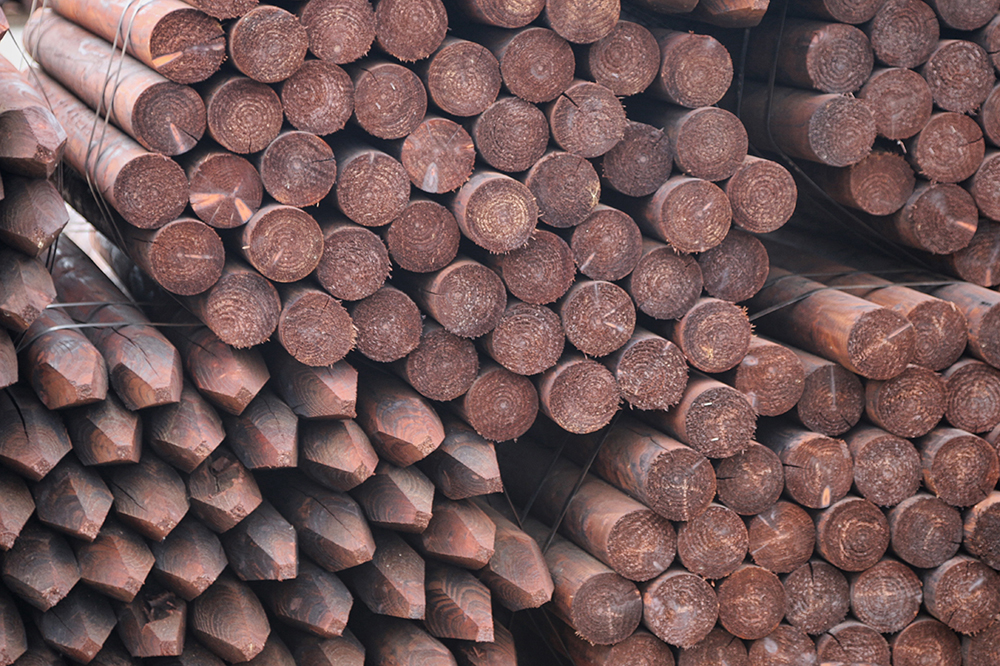
The recent decision by the UK Health and Safety Executive (HSE) to renew the approval of creosote for a further seven years marks a pivotal moment for the fencing sector.
At a time when material costs, sustainability demands and performance expectations are all under increasing scrutiny, this renewal provides much-needed certainty for manufacturers, contractors and end users alike.
Effective from 1 April 2026, the renewed approval secures creosote’s place in industrial and professional applications, including agricultural, equestrian, industrial and highways fencing. With the next review not due until March 2033, the industry can now plan with confidence over a realistic investment horizon.
Few materials have been tested as rigorously in the field as creosote-treated timber. For generations, it has been trusted in high-risk applications where failure is simply not an option. In fencing alone, this includes UC3 and UC4 use classes, encompassing everything from horizontal rails to in-ground posts in highly exposed conditions.
Its performance credentials remain unmatched: creosote-treated timber routinely delivers 40 years or more of service life, significantly reducing the need for maintenance and replacement. This longevity is not just a technical advantage, it is a commercial and environmental one. Fewer replacements mean lower lifecycle costs and reduced demand on timber resources, a factor that resonates strongly in today’s sustainability-driven marketplace.
In the broader conversation around carbon reduction, creosote has a compelling story to tell. As a byproduct of coal tar distillation, creosote does not require the extraction of additional natural resources. This contrasts with many alternative preservatives that rely on complex chemical formulations and globally sourced inputs.
The fencing sector, often operating at scale across rural and infrastructure projects, is particularly sensitive to these factors. Choosing materials that last longer and carry a smaller carbon footprint is no longer just good practice, it is becoming an expectation.
Another often overlooked advantage of creosote is its supply chain resilience. As a co-product of established industrial processes, its availability remains relatively predictable.
By contrast, many alternative preservatives depend on imported chemical components and complex blending processes, exposing them to volatility in price and supply.
In an era where contractors are grappling with fluctuating material costs and procurement challenges, this stability is invaluable. It enables better forecasting, more competitive pricing, and ultimately greater confidence when bidding for large-scale fencing projects.
The renewal does, however, come with clearly defined boundaries. While creosote remains approved for critical industrial uses, all other applications are being phased out, with a deadline of 1 April 2027 for products to be placed on the GB market outside the renewed scope.
This shift reflects a broader regulatory trend: prioritising materials where they offer clear, essential benefits that cannot easily be replicated. In fencing, particularly in high-risk or heavy-duty applications, that case has been clearly recognised.
For the industry, this means adapting to a more targeted use of creosote, ensuring it is deployed where it delivers the greatest value, while alternative solutions are considered for lower-risk scenarios.
As the industry continues to evolve, embracing innovation and responding to environmental pressures, it is essential not to overlook the value of proven solutions. Creosote, now reaffirmed through to 2033, remains one of them.
The next seven years present an opportunity for the fencing sector to make informed, strategic decisions about material selection. By combining the reliability of creosote in critical applications with thoughtful adoption of alternatives where appropriate, the industry can strike the right balance between tradition and progress.