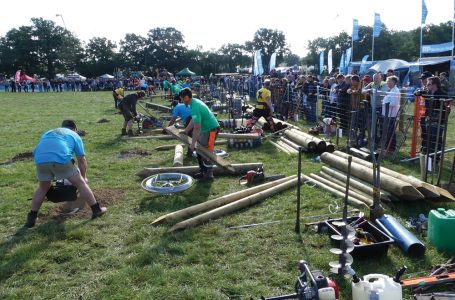
BRITISH OPEN FENCING CHAMPIONSHIPS AND SPEED FENCING COMPETITION SET TO IGNITE APF SHOW 2026


GATE SAFE – 10 YEARS ON


INTERVIEW WITH GATE SAFE’S FOUNDER, RICHARD JACKSON
Since starting Gate Safe almost 10 years ago, have your objectives changed at all?
Our fundamental goal when we first started out, was to save lives and to put an end to any further unnecessary accidents and fatalities as a result of an unsafe gate. This objective remains true today.
At our very first Gate Safe Summit back in 2010, it also became evident that there was a lot of misinformation and confusion regarding what actually constitutes a safe gate or barrier, so education and spreading the word regarding best industry practice in relation to the installation and maintenance of these machines remains a priority.
As we have learned more about the industry and deepened our understanding regarding the various professions who are associated with automated gates – from architects to surveyors, from insurance bodies to electricians, from school caretakers to homeowners – the list is endless – so we have adapted our specific messaging for each target audience.
What are Gate Safe’s key achievements during this time?
Over the last 10 years I’m proud of a number of initiatives that Gate Safe has spearheaded. Taking the campaign to Downing Street and developing an ongoing association with Westminster to ensure the topic of automated gate safety features on the political agenda has not been an easy feat but we remain dogged in our determination to instigate change at the very highest level. Just this month, we were due to meet with the Department for Education (sadly the coronavirus has forced us to postpone that particular meeting) to discuss how to improve gate safety in a school setting.
Of course, the roll-out of the Gate Safe Aware IOSH approved training in 2012 has been key to our ongoing mission to educate those involved in the installation and maintenance of automated gates and with 1,855 Gate Safe Aware installers in the field, the established Gate Safe Aware Installer register means that now people can easily access a suitably trained and competent installer.
The Gate Safe MOT is another scheme which we have launched and over time we expect this to gather more momentum. By making it very simple for a gate owner or gate user to identify via the MOT sticker, when the gate was last serviced, we are hopeful that there will a stronger call to action to ensure gates are installed and maintained correctly, and on time.
One of the most encouraging changes that we’ve witnessed over the last decade is the growing number of homeowners, installers, commercial gate owners, schools and even government bodies, who naturally turn to Gate Safe for guidance and advice on any automated gate or barrier issue. We’ve always retained our status as a truly independent, unbiased authority on gates and this has enabled us to maintain our credibility in the field.
Where have you struggled to initiate change and why do you think this is?
We’ve always found it difficult to garner support from architects, who at the end of the day, are often the first professional capable of ensuring the safety of an automated gate, by specifying a safe design and a gate with the appropriates safety devices in the first place. Architects are mostly interested in building structures which highlight their creative design skills. The safety of any perimeter security measures simply does not feature high on their list of priorities.
Trying to harness the power of Building Control to establish required protocols for any new gates has also proved frustrating. Following a meeting with Local Authority Building Control, we’ve been advised that post the Grenfell Tower disaster, trying to push through any new recommendations for the safety of automated gates via Building Control is likely to fall on deaf ears.
What are your priorities going forward?
Looking ahead we have identified a number of key priorities for 2020. These include strengthening our work within the Schools sector; trying to elicit support from the insurance industry so that insurance premiums are affected if a gate is not safely installed or maintained and continuing our push to stop the sale of automated gate kits to persons who don’t have the necessary skills and training to understand how to deliver a safe automated gate.
Should fencing contractors continue to offer an automated gate installation service?
Diversification is useful for most business’ and for fencing contractors, extending their portfolio of services to include the installation of automated gates can represent a very positive step, providing a year-round potential income stream which is less influenced by the seasons.
Access control is an integral aspect of perimeter security so becoming well versed in the correct installation of automated gates is a natural progression for many fencing contractors – especially given the growing popularity of such installations. Automated gates are no longer the preserve of the affluent elite, today they are a regular feature on many private homes and are frequently installed within a housing development / commercial premises or school setting.
However, whilst we would encourage fencing contractors to consider this area of business, we would strongly urge them to undertake the relevant training ahead of offering the service. This is not only to ensure the safety of their work; it is also to protect their business and their reputation. In
the event of an accident, the courts will always look at the chain of professionals associated with an unsafe gate. Hefty court fines (up to £80K) have been handed out and an installer has even been jailed for his part in the death of a woman who was killed by an unsafe gate.
In your opinion, how many fencing businesses are suitably trained and competent?
The larger organisations in the main have an understanding of what is required, although the level of understanding will vary I am sure. The people that I am most concerned about are the smaller companies that enter the gate automation supply by accident, for example, an automated gate may be added to an existing contract
or perhaps an existing client asks the contractor if they can ‘just sort the automation’ because they are a trusted supplier. As per the country as a whole, the smaller companies represent a significant part of the supply chain.
What are the risks if they haven’t undertaken the relevant training?
The risks are very serious. Being held accountable for an accident or worse will have a lasting impact on a business’ reputation, let alone the distress it will cause to the individual. And few fencing contractors can survive the financial ramifications of being found guilty …
What is your message to fencing contractors who get involved in automated gate installations?
It’s very simple. Take the Gate Safe Aware training so that you can join the register of approved installers. By joining the credible register, you will not only demonstrate your company’s commitment to upholding the highest standards of professionalism and safety, you will also be aligning your business with the charity that pioneered the whole automated gate safety initiative – and was commended by the HSE for doing so. All Gate Safe Aware installers have access to a comprehensive training manual and regular training updates; the Gate Safe advisory line providing independent unbiased technical support, access to the Gate Safe MOT scheme and of course the opportunity to market your business and generate leads via the independent Gate Safe website.