INDEPENDENT SCIENTIFIC STUDY CONFIRMS TREATED WOOD PERFORMANCE

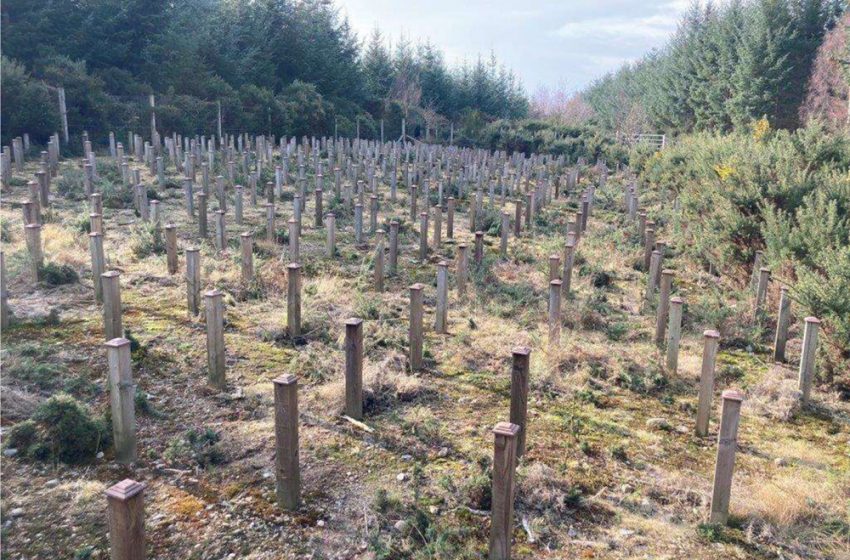
In 2015 the Wood Protection Association commissioned a long-term controlled field trial of sawn and pressure treated British Softwood.
To ensure the study would be robust and truly independent, the Building Research Establishment (BRE) was enlisted to conduct the trial under strict scientific conditions.
The purpose was to test the performance of ground contact fencing timbers – the results of which would help to:
- Gain valuable input into the future development of industry technical standards
- Support the WPA Benchmark quality approval scheme for treated wood
- Build lasting confidence in preservative treated British softwood species in this application as a capable, reliable and quality product 7 years on and the findings are very positive – they are showing that wood, preservative treated correctly for its end use, can be trusted to perform in the field.
THE POSTS
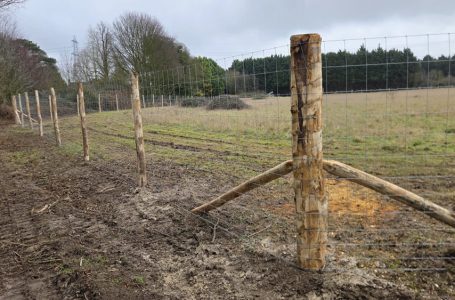
There are 600 treated posts and 80 untreated posts at each test site, made up of equal numbers of matched Spruce, Larch, Douglas fir and Pine samples. Matched samples are also included of un-incised and incised spruce, with kiln dried and 30-40% moisture content (at time of treatment) variants. Three different preservative formulations are used, with matched samples of each throughout. All are commercially produced, sawn posts that are 75 x 75 mm and approximately 1m long.
A two-man team, using an auger, installed each post to a consistent depth (40cm-50cm below ground) on a predetermined grid. The uncut end of the post was installed into the hole created and when installed soil pushed back to ensure good contact with the surface of the post. The above ground cut end of each post was effectively capped to protect the untreated end grain.

THE STAKES
In addition, at each site were installed pine sapwood EN252 stakes (25 x 50 x 500mm) untreated and treated with a wood preservative as an internal reference control, along with EN252 stakes of untreated Sitka spruce, Douglas fir, larch, and pine heartwood. These stakes provide vital information on:
• The characterisation of the biological hazard at the field sites • Natural durability data on contemporary commercial materials in an accelerated ground contact field test
YEAR 7 INSPECTION RESULTS
The performance assessment of the un-treated timber in the field trial after 7 years in ground contact has shown:
- Unsurprisingly, significant failure of untreated EN252 stakes and untreated fence posts at both the BRE Garston and the Birnie Wood sites.
- Evidence is starting to emerge that the Birnie Wood site is a more aggressive environment in terms of decay challenge.
The inspections of preservative treated fence posts show:
- No significant signs of change or deterioration in the inspected treated posts at either site.
- In the case of incised and treated spruce, there were no signs of deterioration at either site.
All inspected posts were reinstalled into their holes and the field trial continues until the next inspection. This will be in 3 years’ time in March 2025, after 10 years in ground contact – these results will be of further interest to all in the timber industry.
An Information Sheet giving further details of the Year 7 inspection of this study can be downloaded from the WPA website.
CONCLUSIONS
The nature of this type of performance testing is crucially valid as it is both long term and set in real world test conditions. It is also an independent ‘product test’ of preservative treated fence posts aiming to meet a minimum of 15-years desired service life.
The fact that no significant or only minor signs of deterioration are observed after seven years of exposure of particular Sitka spruce (KD), larch and Douglas fir fence posts treated with any of the three preservative formulations provides confidence that the other preservative treated material will be performing better.
Following publication of the BRE Year 7 inspection report, WPA Director Gordon Ewbank commented “7 years is a significant period in terms of drawing conclusions from the inspection data. The fact that treated posts are still performing well after 7 years’ service in two very different sets of ground conditions clearly contradicts the anecdotal ‘conclusions’ being drawn by some in the fencing sector – that following the widespread switch from CCA to Copper Organic preservatives 12-14 years ago, early failures of posts after 3-4 years were due to the inferior performance of the new preservatives. Clearly, there must have been other factors involved”.

Gordon continued by saying “the field trial project is reinforcing industry confidence in the efficacy of the post-CCA timber preservative formulations – step 1 in the supply chain. In parallel, the WPA, in partnership with the Timber Trade Federation, is investing considerable resources in growing the network of independently audited and accredited treatment operators under the WPA Benchmark Quality Scheme – step 2 in the supply chain. Together these two important initiatives will help ensure that treated fencing placed on the market is fit for purpose”.
For further information on the innovative WPA Field Trial or any other matter relating to industrial wood treatment, please go to www.thewpa.org.uk or email us via contact@thewpa.org.uk