STOCK FENCE RANGES FROM AN ENVIRONMENTALLY EFFICIENT SOURCE

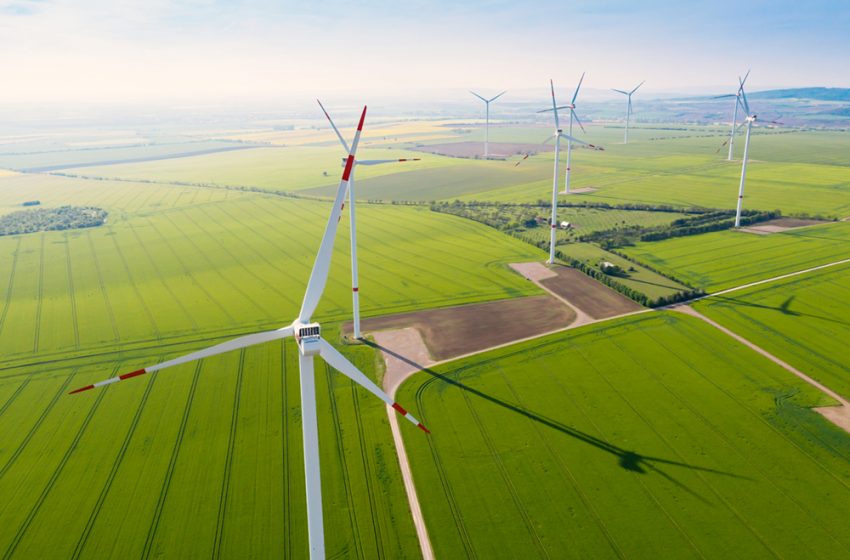
As society becomes more aware of the reality and risks of climate change, demand for environmentally friendly and socially responsible products and brands is steadily increasing.
According to the latest data from the United Nations, global carbon dioxide (CO2) emissions have increased by almost 50% since 1990, a truly alarming figure that should drive us to change our behaviour. Indeed, according to a report from the Office for National Statistics (ONS) IN 2021, 81% of adults in Great Britain reported making some or many changes to their lifestyle to help address climate change.
The government, meanwhile, is incentivising companies to be more sustainable through initiatives such as the Sustainable FarmingIncentive (SFI), which aims to help farmers manage their land in a way that improves food production and is more environmentally sustainable.
Consequentially, forward-thinking companies from other related sectors are opting to introduce sustainable business models; with the manufacture of their products from recycled materials being a prime example of good practice.
One such company is MRT, which already holds the ISO 14001:2015 certification for the manufacture of fences and wires under the Environmental Management System (EMS).
For instance, the ever-popular MASTERFENCE®, FK MRT® and XKMRT® field fence, and ERIZO® and BRAVO® barbed wire ranges are manufactured from wire produced in-house from rod, which is made with up to 85% recycled steel supplied by the CELSA Group™, of which MRT is part.
All finished products comply with BS EN 10218-2, Wire dimensions and tolerances. BS EN 10223-5, Steel wire woven hinged joint and knotted mesh fencing. BS EN 10244-2, Zinc or zinc alloy coatings
This circular approach of their sustainable production model establishes MRT as a leading example of environmentally and energy efficiency; from the purchase of raw materials throughout the transformation into finished products, everything is done within CELSA Group™ and MRT.
CELSA Group™ manufactures steel in electric arc furnaces from the recycling of ferrous materials with minimal CO2 production; as opposed to blast furnaces, which traditionally rely on a constant supply of coke to melt virgin iron ore, emitting vast amounts of carbon.
In addition, each year they reassign 94% of their waste and turn it into new products.
This company is already ahead of the game and is defined as “Low Carbon”. It has committed to reduce CO2 emissions (scope 1 and 2) by 50% by 2030 and be “Net Positive” by 2050.
Since beginning its decarbonisation plans in 2015, it has reduced its CO2 emissions (scopes 1 and 2) by 22%, placing it 36.8% better than the European average.
In summary, combating the effects of climate change is the responsibility of everyone. It is easier than you may think when governments and companies such as MRT offer us more sustainable solutions and alternatives.
For more information visit moreda.com or visit the MRT stand at the various trade and Agricultural shows throughout the year.