A DECADE ON AND STILL GOING STRONG


The second week of May marked a milestone for the Wood Protection Association, as it was its 10th annual WPA Awards and Conference, making it a decade since these notable awards were established.
Members of the association and guests assembled for the event at a venue on the outskirts of Coventry, with the aim of celebrating companies and individuals for their contribution and commitment to noteworthy projects pertaining to the Timber Industry. This should have a specific interest for our readers, who are mainly involved in the world of fencing and landscaping, the relevance of this is centred around the WPA’s role, whose members and primary partners are dedicated to promoting the use of timber as a building material. They act as a technical and advisory body, providing guidance to professionals like specifiers, architects, engineers, and contractors on ensuring wood is fit for its intended purpose.

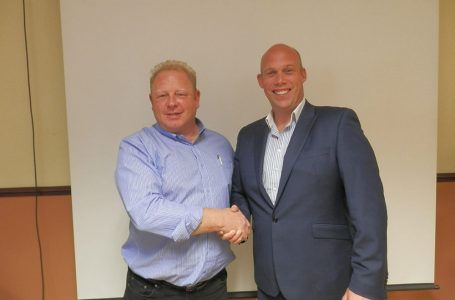
Stephen King, Nick Boulton, Neil Ryan and Pete Clark
They are also actively involved in promoting technologies that enhance the performance and value of sustainable softwood products, this can be through wood modification or flame retardant treatments and preservation. This is a gnarly subject for any industry like fencing, as performance relies on correct application for the end use, especially for fence posts as they are at greater risk of decay. (For those of you who would like to know more, regarding the important work the WPA does especially with their WPA Benchmark Quality Approval Schemes and the Make sure its 4, for ground contact, there’s a wealth of information on theWPA.org.uk).
The main event was sponsored by Arxada, BSW Group, Power Poles Ltd., and Koppers, with associate conference sponsorship from Fencing News magazine. As last year, there was an evening awards event, with a drinks reception and BBQ buffet, which was an informal and relaxed affair, with no seating plan, which allowed people the chance to mingle, catch up with old friends, make new ones, and generally enjoy the social ambience. Trophies were presented for the winners of the Golf Competition and Hot-Shots Tournament, sponsored by Bond Timber, which was all in the name of fun, although maybe some participants may not have got that memo if some of the light-hearted ‘competitive’ banter was to be believed. This all added to the relaxed atmosphere the hosts at the WPA seem to excel at creating, well done to them. The WPA 2024 Awards were then presented, which was a key component of the evening.

The six award categories and the winners are:
- WPA Benchmark Treater of the year, Winner: Walford Timber, sponsored by WPA
- WPA Benchmark Best Kept Treatment Plant, Winner: Dunster House, sponsored by Arxada
- Excellence in Training and Development, Winner: James Jones & Son, sponsored by WPA
- Product or Services Innovation, Woodsafe Timber Protection AB, sponsored by BSW Timber
- Rising Star Award, Chloe Bersey, sponsored by Power Poles UK
- Treated wood Project of the Year, WJ Group (DeckWright), sponsored by Koppers
Special thanks were given to Handrail Creations for machining the beautiful awards and donating the ash they were made from and to Teknos for coating them, and thanks of course to all the sponsors, without their generosity the awards would not be possible. Full details of all the award winners can be found on: thewpa.org.uk
The evening’s entertainment continued, after the awards ceremony with a very amusing comedy spot from stand up comedian and compere, Josh Daniels, whose unique brand of observational humour kept the audience laughing, relaxed and happy, and was obviously a hit, before the evening drew to a close.
The agenda for the following day was of a more serious nature, with the Making the Most of Wood Conference, starting at 9.30. Everyone was welcomed by Janet Sycamore one of the WPA Directors, and who introduced the speakers for the Conference.
Stephen King is a former Director and strategic advisor of SCA Wood UK and is the Chairman of the National Softwood Division of TDUK, which represents timber importers, distributors and traders across the UK. His subject was on ‘Influencing demand for sustainable timber and treated wood’. As the TDUK performs an important role as guardian and promoter of standards, quality and sustainability, Stephen shared his opinions and insights into the prospects for softwoods sales growth in the future, and how opportunities for treated timber products might be stimulated. He spoke of there currently being a good availability of sustainable timber and that around 90% of UK imports are FSC/PEFC certified wood. Many European sawmills are seeking to reduce their carbon footprints, and that the ‘whole use of the tree’ is widely practiced in Western Europe. He identified certain risks associated with the European Union Deforestation Regulations remaining problematic for forest owners within Europe, with most not being able to meet the demands of the legislation in its current form. There are also risks of shortages in demand for wood fibre, due to the absence of Russian wood as a result of the Ukrainian war. He touched on many influences, for example, Brexit, that will be factors influencing shortages, but concluded that EUDR in the end can be a positive influence, but the worry is with the legislation as it looks today; it may cause the inability to meet the current legislation, which may lead to an unwitting block to harvest unproductive forest land.
Nick Boulton, the Head of Technical and Trade Policy for TDUK spoke next on Sourcing, categorization and dynamics of the UK timber supply chain. Nick mentioned the value of wood products placed on the UK market has been estimated at approximately £6 billion, but asks what is the balance of products we are buying and where does our wood in the UK comes from. He examined why we source the products we do, how well they suit our market in terms of quality and the patterns of future supply going forward. He mentioned eight important trees we use in the UK: pine, spruce, larch, birch, oak, beech, ash and walnut and asked, why are we using those? Nick talked in detail about how these are used in our market and all the associated products like decking, cladding, veneers, particle boards, wood insulation boards etc. that are all derived from these raw materials. Nick also gave insights into how in 2023 the 9.7 million green tons of softwood wood produced domestically is used, for instance, 55% went to sawmills, 15% to wood based panels, 5% to UK pulp mills, 18% going to wood fuel, with the remainder going to make round fencing and the rest exported. According to Nick, the long term picture is there has been a bit of decline, despite the government’s ambition to increase forest cover to 16% from the current 13% by the middle of the century, and that we are not planting any where near enough to maintain the harvesting curve. This could impact the timber industry, and the bottom line is there needs to be a lot more commercial conifer planting, that will feed the industry. Where will supplies come from in the future? All thought provoking information.
Pete Clark, the CEO of the Association of Fencing Industries (AFI), spoke next. Pete is a very well known figure in the world of fencing, and he offered his insights into ‘Confidence in preservative treated wood from a fencing contractor’s point of view’. He mentioned that wood is the fencing material that most fencing contractors prefer, but that a ‘spate of premature failures, customer complaints, and business losses’ has led to a loss of confidence in fitness for purpose of treated wood after CCA ceased to be used. This is a long running issue and it is useful to have discussions about it, from a fencer’s viewpoint, with the AFI calling for action by the wood-treating industry to reassure fencing contractors that preservative-treated wood will provide an acceptable service life. Pete gave the conference feedback on the experiences of its members and end users. He summarized, that timber will continue to be used by the majority. Also there are still concerns about the withdrawal of creosote, as there are trust issues around acceptable alternatives for ground contact timber, and also the lack of warranty. End users are more aware of wood alternatives, there are more requests for hardwoods and steel instead, as the longevity of fencing is now more critical than the choice of material. Whilst trust and confidence have been affected, there was an acknowledgment that treatment quality has improved in recent years with Benchmark accreditation being the yardstick.
The final speaker was Neil Ryan, who is a Director of WPA, who spoke on Highways Fencing: is wood at a fork in the road? Neil gave us his thoughts with his interestingly titled take on changes that are afoot on the Highways Fencing market.
He stated that although timber has previously been the primary choice of material in this division for many years, there is a move towards alternative materials being specified. He reported that National Highways has commissioned a review into the fitness for the purpose of its own Sector Schemes, which were established to ensure the quality of materials used in highways contracts. Neil covered, why the WPA wants to ensure that wood continues to be a viable option and why Highways Fencing accounts for only 2% of the road fencing in England, and why it is a special case as it is a highly noticeable type of fencing due to its visibility. He also looked at the recommendations of the review and discussed what needs to happen to ensure those wanting to take part and succeed in this sector have quality assured highways treated fencing materials. All salient information, that gives us pause for thought about this small but interesting part of the fencing industry.
There were plenty of questions from the audience after all four speakers had finished, with some lively discussions. This came to end, as it was time for a pleasant lunch for everyone, which was the conclusion to what was once again, a thoroughly enjoyable and successful WPA event. Many thanks to everyone that put so much hard work into making it such a pleasure to attend.