HOW A BESPOKE METAL FENCING SOLUTION DELIVERED STRENGTH, SPEED, AND SUBTLETY


THE RSPB CHOOSES HAMPTON’S METAL POSTS FOR PETERBOROUGH FLOODPLAIN

Hampton Steel works closely with various trusts and charities, large and small, providing quality fencing products for a variety of applications and projects.
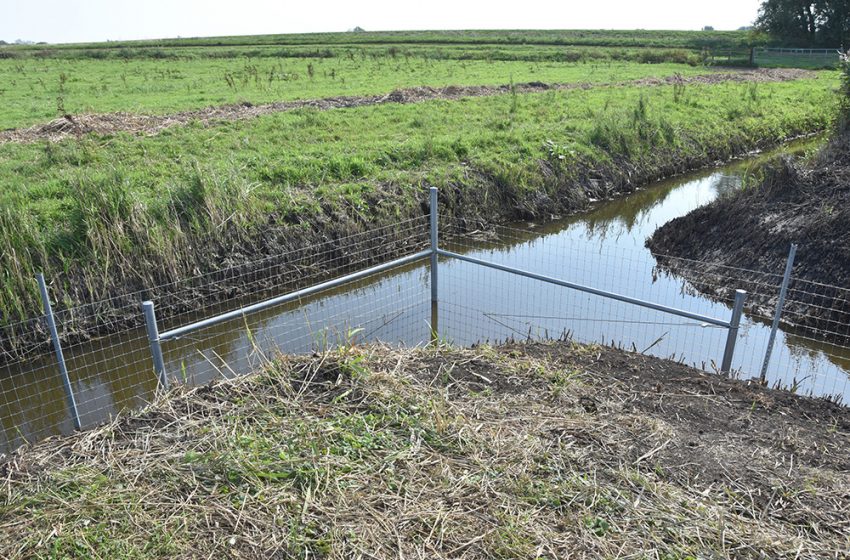
The Nene Washes in Peterborough is one such site, managed by the RSPB and home to a variety of ground nesting birds. The 810 hectares of floodplain meadows are maintained through grazing and hay-cutting. This benefits the wintering and nesting waterfowl although they can be at risk from predators including badgers and foxes. The site is internationally important for bewick and whooper swans and thousands of dabbling ducks such as pintail and shoveler. However, it is the nesting birds that the nature reserve is most important for. These include four pairs of cranes, hundreds of nesting waders such as lapwing, redshank and snipe and the UKs largest colony of black-tailed godwits. Spotted crakes and garganey are also regular visitors. All these birds are ground nesting so vulnerable to predation. Fencing off 134 hectares of low-lying fields is a significant challenge. Any terrestrial fence has to be very strong, tall, buried in the ground and probably electrified to successfully deter foxes and badgers. The alternative and preferred option was to place the fence in surrounding, water filled, ditches where the predators would be forced to swim and then struggle to gain a foothold to push through, climb over or dive beneath the fence.

Craig Mackay the experienced contractor overseeing the project said, ‘This was an unusual job requiring a good proportion of the height of the fence and posts to be permanently under water and buried 1.25m into the ground, the fencing stretches nearly 5000 meters in total. Such testing conditions required metal posts rather than wood for their increased life span and additional durability. Having trialled various designs of metal posts Hampton’s Versalok® came out on top. The larger, more robust profile of Versalok® and its superior versatility, allowing us to affix the fence at any point down the post was a definite advantage. The design of the post, allowing the earth to be forced up the centre of the steel, provided more reassurance that once in, these posts weren’t going to move.
This was a challenging job to do; standing in water often waist deep, not being able to see either beneath the surface to connect the fence to the posts or the levels of the ground you’re dealing with. Despite these difficulties we were able to drive the posts in with relative ease and they absolutely stood fast. With holes down the whole post to affix the fence, we weren’t governed by preexisting fixing points which gave us the flexibility we needed.’
‘Similarly, Hampton’s robust box and angle strainer systems proved easy to work with and drive in, their simple design certainly helped with the overall installation’.
‘I’d definitely recommend Hampton’s Versalok® posts andmetal strainers’ said Craig Mackay, Kiwi Services (Hampton ‘s metal posts were supplied through Countryside Supplies Harleston).
Hampton’s Versalok® metal post is manufactured from high yield strength steel in 1.5mm and 2.5mm thickness and in standard lengths of 1.8m, 2.2m and 2.9m. Other lengths are available, minimum order quantities apply.
Produced with a zinc, magnesium and aluminium coating, Versalok® metal posts provide an excellent versatile, long life alternative to timber.
Where required, two clips can be inserted into one hole thereby increasing product versatility.
Combine with Hampton’s steel box and angle strainer systems, to provide a completely integrated metal fence post system.
View Hampton’s full product range at www.hamptonsteel.co.uk call 01933 234070 to speak to the sales team about your fencing requirements.
Follow on Facebook, Twitter and Instagram @HamptonSteel
The largest nature conservation charity in the country, the RSPB manages 220 nature reserves in England alone, covering 158,725 hectares and providing homes to over 17,500 species.
For more information on the RSPB and all of their conservation work visit www.rspb.org.uk